

Genetec Inc., a global leader in enterprise physical security software, released public safety-specific findings from its 2026 State of Physical Security Report, based on a survey of physical security end users, channel partners, systems integrators, and consultants worldwide.
Responses from North American public safety professionals show a strong focus on officer safety, increased situational awareness, and faster response times, as agencies work to address rising demands with limited staffing.
Officer Safety And Situational Awareness Drive Use
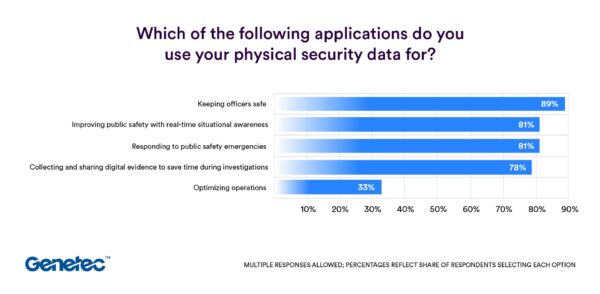
Public safety agencies are primarily using physical security data to support frontline safety and real-time operations. Nearly nine in ten respondents said they use security data to help keep officers safe, while 81% rely on it to improve real-time situational awareness and collaboration between agencies. Responding to public safety emergencies was also cited as a top application (81%), highlighting the need for integrated data during time-critical situations.
Collecting and sharing digital evidence remains a core use case, with 78% of respondents saying it helps save time during investigations. Together, these findings point to a shift toward more connected, intelligence-driven public safety operations.
“Public safety agencies are under increasing pressure to do more with fewer resources,” said Phil Malenscik, Vertical Account Manager, Public Sector at Genetec Inc.
“By bringing together physical security data from multiple systems, officers can see the full picture more quickly, respond faster, and stay safer on the job. At the same time, automating routine tasks gives teams more time to focus on protecting their communities and making decisions that really matter.”
Improving Officer Safety And Response Times
When asked which metrics justify physical security investments, increased officer safety ranked highest, cited by 63% of respondents. Faster response times (52%) and improved situational awareness (48%) followed closely, highlighting how agencies value a results-driven approach to security investments.
Acceleration of investigations (41%) and shorter time to incident resolution (44%) were also noted, reflecting the importance of streamlined workflows and faster access to critical information during and after incidents.
Staffing Constraints Remain The Top Challenge
Workforce limitations remain the biggest challenge facing public safety organizations. 44% of respondents cited lack of staff and the need to do more with less as their primary concern. Other challenges included keeping officers safe (16%) and conducting effective investigations using automatic license plate recognition (ALPR) and video jointly (12%).
These constraints are driving interest in solutions that reduce investigative workload, improve information sharing, and enable agencies to operate more efficiently without compromising safety.

Genetec Inc. is a global technology company that has been transforming the physical security industry for over 25 years. Its portfolio enables enterprises, governments, and communities to secure people and assets while improving operational efficiency and respecting privacy. Genetec delivers leading solutions for video management, access control, and ALPR, all built on a unified, open architecture with cybersecurity at their core. Its portfolio also includes intrusion detection, intercom, and digital evidence management solutions.
Internal Links URLs
https://security.world/public-safety-technology
External Links URLs
https://www.genetec.com/industries/public-safety
Frequently Asked Questions (FAQs)
1. What is the Genetec 2026 report about?
It highlights public safety priorities, challenges, and the growing role of integrated physical security systems.
2. What are the key priorities for public safety agencies?
Officer safety, situational awareness, and faster response times are the top focus areas.
3. What challenges are agencies facing?
Staff shortages, increased workload, and the need for efficient investigations.
4. How is technology helping public safety teams?
Integrated systems improve data sharing, automate tasks, and accelerate response and investigations.
5. What role does digital evidence play?
It helps streamline investigations and saves time for public safety professionals.