

By Nauzad Sadry, Editor, Security.World
For years, video analytics has been the silent workhorse of physical security, a technological promise often whispered about but rarely fully realized. We, as security professionals, have seen its evolution firsthand. From rudimentary motion detection to sophisticated behavioral algorithms, the journey has been long and incremental.
Yet, with the recent explosion of interest in Artificial Intelligence (AI), video analytics isn’t just evolving anymore; it’s undergoing a profound revolution, finally delivering on its long-held promise of true value for organizations.
It’s easy to dismiss the current AI fervor as mere hype. After all, the concept of intelligent systems analyzing video isn’t new. Early iterations, dating back decades, offered basic functionalities. Think of the simplistic tripwire alarms that would trigger from a blowing leaf or a sudden change in lighting – more nuisance than protection.
These systems, while foundational, often suffered from high false-positive rates, leading to alert fatigue and skepticism among security teams. The data deluge from thousands of cameras became overwhelming, and the true value of constant human monitoring quickly diminished. We needed a smarter way to sift through the noise.
From Rule-Based to Learning Systems: A Leap in Accuracy
The most significant shift has been the move from rule-based programming to machine learning and deep learning. Early analytics relied on predefined rules – “if a pixel changes here, then alert.” This was rigid and easily fooled. Modern AI-powered analytics, however, learn from vast datasets. They can distinguish between a human and an animal, a car and a bicycle, even in challenging environmental conditions like rain, fog, or low light.
Consider the progression:
- Early 2000s: Basic motion detection, object counting (often inaccurate), and rudimentary tampering detection. These were largely post-event forensic tools rather than proactive security measures.
- Late 2000s – Early 2010s: The introduction of more sophisticated algorithms for object classification (e.g., distinguishing vehicles from people) and directionality. This period also saw the rise of facial recognition, though often with significant limitations in varying conditions. Accuracy improved, but false positives remained a challenge, demanding constant fine-tuning.
- Mid-2010s to Present: The age of deep learning and neural networks. This is where AI truly transformed the landscape. Systems can now learn complex patterns and anomalies. They can understand context. For example, a person loitering in a restricted area after hours is an anomaly, while the same person during business hours is not. This contextual understanding is crucial for reducing false alarms and focusing security personnel on genuine threats. The accuracy of these systems has skyrocketed, often reaching human-level or even superhuman performance in specific tasks.
Beyond Security: Deeper Integration and Broader Value
Another critical development is the seamless integration of video analytics with other security and business systems. Historically, video surveillance operated in a silo. Today, it’s becoming the central nervous system of intelligent buildings and operations.
- Integrated Security Platforms: AI-powered video analytics now feeds directly into Physical Security Information Management (PSIM) and Security Information and Event Management (SIEM) systems. This allows for a holistic view of security events, correlating video data with access control, intrusion detection, and even cybersecurity alerts. A single suspicious event captured on camera can trigger a cascade of actions, from locking doors to dispatching guards.
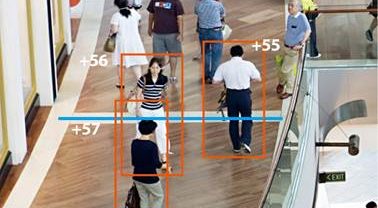
- Operational Efficiency: The value extends far beyond traditional security. Retailers use analytics for footfall analysis, queue management, and store layout optimization. Manufacturers leverage it for quality control, worker safety monitoring (e.g., detecting if employees are wearing proper PPE), and process optimization. Smart cities deploy it for traffic management, crowd control, and even environmental monitoring. The ability to extract actionable business intelligence from video streams is a game-changer.
For instance, consider a large logistics warehouse. AI analytics can detect forklifts operating unsafely, identify unauthorized personnel in restricted zones, or even monitor the speed of package processing. This isn’t just about preventing theft; it’s about optimizing workflow, enhancing safety, and ensuring compliance – all contributing to the bottom line.
Delivering True Value: ROI and Proactive Security
The return on investment (ROI) for these advanced systems is no longer a theoretical construct. Organizations are experiencing tangible benefits:
- Reduced False Alarms: By dramatically cutting down false positives, security teams can focus on real threats, leading to faster response times and more efficient resource allocation. This also reduces the operational cost associated with investigating non-events.
- Proactive Threat Detection: AI enables predictive and proactive security. Instead of simply recording an incident, these systems can identify developing situations that indicate potential threats, allowing for intervention before an event escalates. This could be detecting unusual behavior, identifying a known individual on a watchlist, or recognizing abandoned packages.
- Enhanced Forensic Capabilities: While proactive, the forensic value remains immense. AI can rapidly sift through hours of footage to locate specific events, individuals, or vehicles, significantly reducing investigation time from days to minutes.
- Operational Intelligence: The data gathered from video analytics provides unparalleled insights into an organization’s operations. This intelligence can drive improvements in customer service, operational efficiency, and even product development.
The AI hype around video analytics is, for once, justified. What was once a niche, often unreliable tool, has matured into an indispensable asset. As a physical security expert, I can confidently say that these intelligent eyes are not just watching; they are learning, integrating, and delivering a level of accuracy and value that is fundamentally transforming how we secure our environments and optimize our operations. The future of video surveillance is not just about cameras; it’s about the intelligence that empowers them.