
Genetec Security Center Unifies Operations For City Of Toronto’s New Forensic Services And Coroner’s Complex

genetec

Genetec ™, a global leader in unified IP security solutions and ranked number-one * in video management software (VMS), today announced that Security Center—its unified IP security platform —was recently deployed as part of a highly sophisticated security implementation for the brand new City of Toronto Forensic Services and Coroner’s Complex (FSCC). The new 49,000 square meter state-of-the-art facility built by Carillion Canada is set to revolutionize forensics in Canada, and enable them to support increasingly complicated investigations. Tasked to design, install and commission the highly sophisticated security objectives of the new FSCC facility, Marcomm Systems Group Inc. (MSGI) chose Genetec Security Center for the fully integrated IP security management grid. Omnicast, the VMS system in Genetec Security Center, manages the crucial video surveillance requirements for the facility’s perimeter. Several customized sub-systems were added, including biometric access control, alarm monitoring for critical areas, roof line detection and other locations of concern, and completed with a facility-wide duress panic alarm system with a Voice over IP (VoIP) recoding box to record all distress signals for evidence and review. “As veteran systems integrators, it is important that we work with a unified platform that is open-architecture, flexible, functional and user friendly,” said David Trudel, President of Marcomm Systems Group. “We have deployed Genetec on so many sophisticated projects over the years that we have become intimately familiar with its functionality. When we began planning the integration for The City of Toronto Forensic Services and Coroner’s complex, we would not have considered […]

Read More ›

Grundig Launches New GCI-K2505B Low-Light Box IP-Camera

GCI-K2505B

By Andy Ball on October 17, 2013 GCI-K2505B Grundig have announced the new GCI-K2505B true day / night box camera as the latest addition to the company’s comprehensive IP range. The high quality IP camera offers outstanding sensitivity at low-light levels. The camera remains in colour mode until 0.03 Lux, before switching to black and white mode, where its sensitivity extends to an incredible 0.005 Lux with no additional IR lighting. The GCI-K2505B uses a 2 Megapixel CMOS sensor with dual shutter and Progressive Scan technology to produce high quality, quad video streams at these exceptionally low light levels. Installers can select a range of resolutions for each video stream. Options include a single, 1080p stream at 50 frames per second (FPS) in H.264 or MJPEG formats; dual streams of 1080p and 720p at 50FPS; and Quad streams of 1080p, 2x 720p and CIF, simultaneously at 25 FPS. Andreas Franusic, product manager at Grundig, explains, “The high ‘frames per second’ rate increases low-light performance and enables real-time video recording from multiple streams simultaneously. The Quad stream technology allows efficient video transmission and storage, whilst saving network bandwidth. The streams can be optimized to suit applications, such as 1080p for NVR recording and lower resolution 720p, D1 or CIF video streams for monitor displays, PCs, tablets and smartphone viewing.” The GCI-K2505B is ONVIF S compatible, comes with a micro SD/SDHC memory card slot for alarm and scheduled image recording and has a power over Ethernet (PoE IEEE 802.3af) option, so […]

Read More ›

On Proliferating State And Local Surveillance Technologies

city surveillance

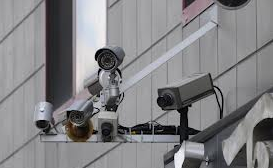
Over at  Security States,   I have this piece up , about the proliferation of city- and state-operated surveillance technologies—and the need to pair collection rules for these technologies with effective use and access rules.  The piece begins: The  New York Times  reports today that “ Privacy Fears Grow as Cities Increase Surveillance .” The main theme is that municipal police and law enforcement agencies around the country are deploying new and more sophisticated data gathering and analysis technology, some of it bought with counter-terrorism funds, stoking privacy concerns among residents and watchdog groups. As with much of the early reporting of National Security Agency surveillance programs disclosed by Edward Snowden, the  Times  piece is heavy on what the systems collect and how they store and combine information.  Only near the end of the piece, however, does it address accompanying rules and guidelines being developed to regulate such issues as who can access this information, for what purposes, under what supervision, and with what checks. Rapid technological development and lower price-tags for it are inevitable, and the most important question is whether regulation for how surveillance technology and data may be used can keep up. It is no surprise that local governments are deploying technologies like video surveillance systems, license plate readers, drones, networks of sensors, and systems for aggregating and analyzing the information streams they produce. The New York Police Department has  been out in front of other cities  in this regard, on account of its size, resources, threats, […]

Read More ›

New Leader Takes The Helm At Firetide

As end user demand for immediate, on-demand access to video surveillance feeds has grown in recent years, so too has the need for reliable video transmission solutions. Firetide, a Silicon Valley-based provider of wireless mesh networks, is one of the companies looking to meet that demand and has more than 10,000 customers in 40 countries around the world. Earlier this year, Firetide announced a change in its senior leadership naming John McCool as the company’s new president and CEO. Prior to joining Firetide, McCool, who has a background in electrical engineering, spent the past 17 years at Cisco. At one point, McCool was in charge of the company’s switching and data center products before moving into a global sales role responsible for wireless switching, routing and security products. “At that point, I saw a lot of things in the market that were extremely exciting around networking,” explained McCool. “This entire trend – the change of networking from kind of an indoor, IT-oriented technology to moving to be embedded in devices and the need for those devices to be outdoors – and I got very intrigued with what Firetide was doing in that space and thought it was an excellent place to drive innovation.” Just last week, the company launched its new HotPort 5020 wireless infrastructure node , which is designed to allow users to place more devices at a lower cost over a mesh network. “What we noticed for large, city-wide, neighborhood-wide deployments is that people love (the Firetide […]

Read More ›

Oncam Grandeye 360-Degree Technology Chosen To Protect Ireland’s Shannon Airport

shannon airport

Oncam Grandeye, the global innovator in technology, security solutions and 360-degree surveillance cameras, has been awarded a contract for the Shannon Airport Authority. Glasgow-based Video Management Systems (VMS), which selected Oncam Grandeye’s technology, will be the local integrator on the project, and the cameras will be controlled and managed through Titan Vision, VMS’ IP CCTV video management and PSIM solution. Shannon Airport is located on the western-most part of Ireland and is considered to be the gateway between Europe and the Americas. It handles approximately 3 million people a year, and nearly 50,000 metric tons of freight gets transported through its cargo area. The facility is enormous, with 40 check-in desks, 5 baggage carousels and 14 boarding gates (including 6 air bridges). There are nearly 40 aircraft parking stands. The car-parks can hold more than 5,000 cars. John Francis, the security manager at Shannon Airport, faces myriad challenges, and he tackled the terminal first. 360-degree cameras have been placed at the boarding gates in the large, congested area used by low-cost airlines. The main reason for surveillance here is health and safety. “We’re looking for slips and trips,” says Francis. Other cameras are positioned in the arrivals area, which houses vending machines, ATM’s, car-hire desks and pay stations for the car park. “The PTZ (pan-tilt-zoom camera) was always looking the wrong way when something happened, and was sometimes left zoomed in by an operator,” he said. “This is never the case with the 360; we see everything.” Shannon needed […]

Read More ›

DIY Security Cameras – A Quick Overview

Like everything else in life you get many different brands, quality differences and specs on these things. The most expensive is not always the best, but don’t buy the cheapest either. Compare apples with apples. Start by determining what you require. Do you only want to see movement or do you actually want to see that it is a person wearing a blue cap with a moustache and a mole on his chin at 15 metres from the camera? You have to at least check what the resolution (TV lines) of the cameras are and if you are going to record the cameras, at what resolution the DVR records. In the past the cheaper DVRs recorded @ CIF which is an effective resolution of 352 x 288 pixels per camera while the preview on the screen was usually much higher (e.g. 2CIF or 4CIF). A lot of people made the mistake by not noticing that the recorded resolution was much lower than the previewed resolution, when they looked at the advertised specs. In layman’s term that means that when you saw the guy walking past the camera everything looked fine on the monitor, but when you played back the recording you could not determine if it was a dog or a human in the picture. Usually you would want a recording resolution of at least 4CIF or D1 which is an effective resolution of 704 × 576 pixels. Lately some of the recorders records at HD (1280 x 720) […]

Read More ›

Frost & Sullican: Mass Transport Operators Reinforce Security As Threats and Insuracne Claims Grow

mass transit

Frost & Sullivan: Mass Transport Operators Reinforce Security as Threats and Insurance Claims Grow: — Ideal security solutions will have open architectures to offer convenience and value-added services LONDON, Oct. 15, 2013 /PRNewswire/ — After airports, it is the turn of the global mass transport market to beef up security, as governments begin to address the security risks posed by large-scale unprotected infrastructure. In addition to terrorism threats, rising instances of crime, antisocial behaviour, and insurance claims have turned operators’ attention to new technologies in video surveillance, perimeter security, and sensors. The need for stronger security is undisputed, but mass transit operators are often constrained by lean budgets, especially since it is difficult to demonstrate return on investment (ROI) from these installations. New analysis from Frost & Sullivan ( http://www.defense.frost.com ), Global Mass Transport Security Market Overview, finds that the market earned revenues of $1.76 billion in 2012 and estimates this to reach $3.16 billion in 2021, at a compound annual growth rate (CAGR) of 6.7 per cent (2012 to 2021). The market will continue to expand due to large investments in metro projects in China and the proposed expansion of current metro projects in India, Europe, and the Asia-Pacific. “Most of the security spending in mass transportation is expected to be directed at securing the stations where travellers gather, buses and rolling stock in which travellers are transported, and the areas adjacent to places where transportation is stationed,” said Frost & Sullivan Aerospace, Defence and Security Research Analyst Krzysztof […]

Read More ›

Analysts Applaud Synaptics? Acquisition Of Biometric Fingerprint Firm

synaptic

By Teresa Rivas Synaptics ( SYNA ) was up 6.5% at the close, as investors cheered the company’s acquisition of privately held Validity Sensors , a California-based developer of biometric fingerprint authentication systems. According to the deal, Synapics will pay about $92.5 million in stock and cash for the firm, plus potential performance payments over a multi-year period that could bring the cost up to $255 million. Needham & Co. analyst Rajvindra Gill was upbeat about the acquisition in a note out today, reiterating a Buy rating and $54 price target. “We believe this acquisition is crucial for several reasons: 1) it places SYNA at the forefront of a leading-edge technology in the handset market; i.e., fingerprint sensors; 2) it effectively doubles the addressable market as SYNA can sell an additional sensor per unit; 3) it further solidifies our thesis that SYNA has the leading and the broadest technology platform in the capacitive touch market; and 4) it expands SYNA’s entry into mobile payments, cloud-based services and enterprise mobile device security.” Gill noted that Validity Systems’ high-frequency RF imaging technology is similar to that used in Apple’s ( AAPL ) new iPhone 5s, and that there is increasing interest from handset OEMs for this technology. Pacific Crest’s John Vinh was optimistic as well. He made a similar point as he reiterated his Outperform rating and $58 price target in a note out today: The deal “provides an opportunity for Synaptics to expand its content opportunity with key smartphone, tablet […]

Read More ›

MasterCard Joins FIDO Alliance March To Standardize Biometric Authorization And Other Alternatives

biometric passwords

Danielle Walker, Reporter October 09, 2013 Plans include an open standard that would shrink users’ dependency on passwords. Plans include an open standard that would shrink users’ dependency on passwords. MasterCard has joined forces with an organization that aims to eliminate consumers’ dependency on passwords and PINs for authentication. Last Wednesday, USA Today broke the news that the global payment processor planned to become a member of the Fast Identity Online (FIDO) Alliance, which was formed in 2012 by online transaction giant PayPal and a number of other companies to embrace innovative solutions for verifying users’ identities. By early 2014, the FIDO Alliance plans to introduce specifications for an open protocol standard for two-factor and multifactor authentication . The specifications would support biometric technologies, such as fingerprint scanners, voice and facial recognition, and other authentication measures, including one-time passwords (OTP) and near-field communication (NFC), a wireless technology that establishes communication between mobile devices through physical contact. In April, Google joined the FIDO Alliance. Now with the addition of MasterCard, the organization gains another power player in the industry that could give weight to its mission. On Tuesday, Brennen Byrne, CEO of Clef, an Oakland, Calif.-based mobile authentication startup, told SCMagazine.com that MasterCard’s participation in FIDO was a positive step. “The industry in general is looking for new ways to improve [methods] of authenticating,” Byrne said. “So it’s not surprising to me that MasterCard is joining on and taking the FIDO Alliance seriously,” he continued, adding later that “it’s good […]

Read More ›

PayPal Study Finds Consumers Okay With Biometrics

biometric passwords

Visitors walk past an eBay and PayPal banner at the Mobile World Congress in Barcelona in this Feb. 28, 2012, file photo. Apple’s newest iPhone may have spurred some debate over whether it’s a good idea to unlock your phone with your fingerprint, but a new study from PayPal finds that a majority of Americans are comfortable with the idea of using their biometric information instead of the pesky passwords that are currently the norm. The survey, sponsored by PayPal and the National Cyber Security Alliance, found that 53 percent of those surveyed are “comfortable” replacing passwords with fingerprints, 45 percent would opt for a retinal scan, and 41 percent are comfortable with photo identification. This survey was conducted using an opt-in online panel, and its results cannot be projected to the overall U.S. public. Responses to the survey sketch a picture that suggests we’re more reliant than ever on our smartphones but still very unsure about the proper security measure we should be taking on our mobile devices. Two-thirds of those polled said that they keep their smartphones no farther than one room away — and 10 percent said they have their smartphones in hand at all times when not showering or sleeping. But nearly as many people, 63 percent, said that they don’t know or are unsure about what kind of financial information they store on their phones. Follow The Post’s new tech blog, The Switch , where technology and policy connect.

Read More ›

UINT & Mereal Biometrics Launches Biometric Smart Card With Embedded FPC Fingerprint Touch Sensor

biometric smart card

GOTHENBURG, Sweden, October 8, 2013 /PRNewswire/ — The biometric smart card launched by UINT & Mereal Biometrics is a multi-application smart card using Fingerprint Cards’ (FPC) embedded fingerprint touch sensor and processor. It enables biometric fingerprint authentication in a top secure environment with local matching providing privacy of holders as biometric data never leave the card. First applications of the card are physical and logical access control for French Casino Operator Partouche. The smart card is now finalist in the award Discovery category at the upcoming show Cartes in Paris (19-21 Nov, 2013) and will be displayed by Mereal Biometrics in Booth 4N 087 [http://www.cartes.com/Catalogue/EXHIBITOR-LIST/Exhibitor-list/MEREAL-BIOMETRICS/ (search_field)/mereal+biometrics/(sort_by)/az/(limitation)/20 ] . “A new generation of Smart Card is born; for the first time a smart card is having its own embedded biometric fingerprint reader, performs the verification on board and can be used in multiple applications. Introducing biometrics into the smart card market means meeting the toughest industry requirements available when it comes to low power consumption, optimized form factor and robust sensor design. FPC’s fingerprint sensors meet these requirements and we are really excited to now introduce this biometric smart card to the market,” says Philippe BLOT, Chief Executive Officer of UINT ( http://www.uint.fr ). Johan Carlstrom, President and CEO of FPC, comments: “This launch of a biometric smart card is a market break-through and marks a milestone for integrating biometrics into smart cards. Security and protection of privacy has always been top priority in smart cards and the use of […]

Read More ›

Biometric Exit Improvement Act: Wrong Solution To Broken Visa And Immigration System

us capitol

Email Print PDF Several Members of Congress recently released the Biometric Exit Improvement Act in an effort to enhance the U.S.’s security and immigration system. However, the law triples down on a costly policy that adds little real security. Instead of feel-good but ineffective strategies, Congress should reconsider the biometric exit requirement and push the Administration to faithfully execute the U.S.’s existing immigration laws. Biometric Exit Has Consistently Not Been Implemented The requirement for an integrated entry-exit system has been in place since the Illegal Immigration Reform and Immigrant Responsibility Act of 1996. In the following years, several other bills were passed that called for an entry-exit system, with increasing requirements for biometric technology, leading to the creation in 2003 of US-VISIT, a program focused on developing a biometric entry-exit system. The Intelligence Reform and Terrorism Prevention Act of 2004 explicitly required and called for the acceleration of US-VISIT’s efforts to create an automated biometric entry and exit data system. While the Department of Homeland Security (DHS) made progress on the entry portion of US-VISIT, the exit system largely went nowhere. Congress repeated its demand for a biometric exit system in 2007, setting a deadline of 2009. That deadline came and went with only two small pilot programs. Since then, DHS has continued its slow move to meet this requirement in what the Government Accountability Office (GAO) has called “a long-standing challenge for DHS.” [1] The Biometric Exit Improvement Act would be at least the third law to call […]

Read More ›