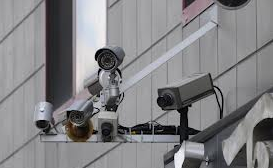
Cleveland police – outside of Brisbane, Australia, have called for residents and businesses with security cameras installed to get in touch and help prevent crime. Officers have established a registry database cataloging the location of cameras at private dwellings, offices, and retailers across the city. If a crime happens near one of the cameras, police will ask the device’s owner for the footage around the time of the offence to see if it yields any evidence.
Iveda® (OTCQB: IVDA), a leading enabler of cloud-based video surveillance through its Sentir™ platform, announced its partnership with Wolfcom Enterprises, manufacturer of body-worn cameras based in Hollywood, California. The partnership will offer next generation integration of proprietary cloud technology into a body camera, enabling cloud storage, and access to live video.
News editors obtained the following quote from the background information supplied by the inventors: “The present disclosure relates generally to computer vision, and more particularly, to security screening and long range video surveillance using computer vision. “Security screening systems inspect checked and hand baggage, cargo, containers, passengers, etc. for content, such as, explosives, improvised explosive devices (IEDs), firearms, contraband, drugs, etc. They play a key role in the Homeland Defense/Security strategy for increased safety in airports, air and sea traffic. For instance, since August 2010 the government has mandated 100% air cargo screening, with possible extension to sea cargo. State-of-the-art security screening systems require improvement in a number of aspects. This includes (a) efficient and effective automation for improved throughput and focused operator attention and (b) a systems view and integration of various components in screening, e.g., reconstruction, segmentation, detection, recognition, visualization, standards, platform, etc., to achieve an efficient screening workflow.
Guardian 8 Corporation’s CEO Steve Cochennet accepted the prestigious 2014 Campus Safety BEST Award for the Pro V2 and outlined goals in reducing conflict through enhanced non-lethal (ENL) deescalation and incident recording.
Former Delhi Chief Minister Arvind Kejriwal has promised to make Delhi streets safer like the UAE with the help of security cameras, if voted to power again. The national convener of Aam Admi Party (AAP) who is readying to fight assembly elections in Delhi early next year, promised to install one million WiFi security cameras across Delhi to make the streets safer, especially for women.
Choice, cost savings, speed of deployment, and convenience. That is what the reuse of existing cables can offer end-users when they are looking to migrate their existing analogue based surveillance, access control or intercom system, to IP transmission. For decades, tens of millions of analogue-based CCTV cameras have been connected to recording & control equipment via coax cable. Also, about 80% of analogue cameras installed via coax have cable runs greater than the defacto Ethernet standard of 100m; typically being in the range of 150-200m.
Terrorism surveillance laws in New Zealand have completed their second reading and are set to pass into law later tonight under Urgency rules. This may be a tiny island nation in the South Pacific, but New Zealand could be a bell weather item for other countries to adopt similar laws dealing with video surveillance capabilities.
PlateSmart Technologies and Samsung Techwin together have created the worlds first line of surveillance cameras to be truly capable of License Plate Recognition (LPR). First introduced to the public at the 2014 ASIS Conference in Atlanta, the "open-platform" Wisenet III cameras were designed to allow PlateSmarts ARES LPR-based video analytics solution and can accommodate a wide variety of add-on apps. ARES is the first LPR app available for the cameras.
In the most recent 2014 A&S Security 50 rankings, Dahua Technology moves three spots forward to 6th Place. According to the A&S Security 50 report, Dahua sustained double-digit revenue growth of 53.2% in 2013, which is the highest among the top 10.
Milestone Systems? world-leading open platform IP video management technology is helping Restaurant Brands NZ to reduce theft and improve daily operations across New Zealand?s KFC, Pizza Hut, Carl?s Jr, and Starbucks locations. The parent company in New Zealand for KFC, Pizza Hut, Carl?s Jr and Starbucks, Restaurant Brands has installed Milestone XProtect® video management software (VMS) throughout their chain of restaurants.
Smart home technology is here and is increasing penetration into consumer’s homes day-by-day but, as with any technology, standards and protocols matter.
For the past 15 years or so, technology companies have sought to develop software solutions that enable the use of Internet protocol (IP) for wireless sensor networks and other connected devices that leverage Internet connectivity. As a result several means of connectivity and networking have emerged that are making their way into smart home solutions including ZigBee and 6LoWPAN.
Many of you might have a feeling that they can use a normal desktop hard drive for their surveillance needs. They go with this logic: thinking that all hard drives are same and operate in a similar manner. But this assumption of them is quite wrong. Traditional, desktop hard drives are made to operate only for 8 hours a day and 6 days a week.
As published previously on SecurityHive, Samsung Electronics announced that it has entered into an agreement to sell its shares of Samsung Techwin to Hanwha Group. With the stock purchase, Hanwha Group will become Samsung Techwin?s largest shareholder. Samsung Techwin has achieved incredible growth globally in the professional security industry over the past several years.
Genetec™, developer of unified IP security solutions announced the next generation of its IP-based automatic license plate recognition (ALPR) cameras, the AutoVu Sharp and AutoVu SharpX. The new cameras enable the concurrent detection of license plates from a greater variety of models, capturing license plates from different states or countries on the same system.
Minuteman Security Technologies is getting into product manufacturing with the introduction of TransitSentry, a mobile IP video surveillance and security monitoring system designed specifically for mass transit vehicles. The integrator developed TransitSentry over the course of the past two years while it was working on a $7 million mobile video surveillance project for the Massachusetts Bay Transportation Authority.
SpotCam, the cloud home monitoring service startup, announces a new Time Lapse feature for its SpotCam Wi-Fi home monitoring camera. The new time lapse capability combined with SpotCam’s free 24 hours of cloud based recording lets users easily review a day’s worth of video footage in seconds.
iOmniscient, the leader in providing intelligent analytics solutions has just won ?The Australian Innovation Challenge 2014? for the most innovative Information and Communication Technology. The Award was for iOmniscient’s latest product which uses artificial intelligence to significantly reduce the response time for emergency services during accidents.
Available at No Cost to U.S. Airport Operators is the recently produced document Standard for Airport Security Access Control Systems. DO-230D provides guidance on acquiring and designing airport security access control systems, testing and evaluating system performance, and operational requirements.
Many people understand the dangers of hackers accessing webcams. A simple fix is to place a sticker over the pinhole camera lens. Perhaps lesser known is the focus of hackers and thieves on wireless cameras used for security. Internet protocol cameras, also called IP or wireless cameras, are often used to monitor homes and small businesses. Nanny cams are usually wireless also. If set up improperly or accessed in an unsecure manner, video data can become open to the public.
Computer software only recently became smart enough to recognize objects in photographs. Now, Stanford researchers using machine learning have created a system that takes the next step, writing a simple story of what’s happening in any digital image. At the heart of the Stanford system are algorithms that enable the system to improve its accuracy by scanning scene after scene, looking for patterns, then using the accumulation of previously described scenes to extrapolate what is being depicted in the next unknown image.